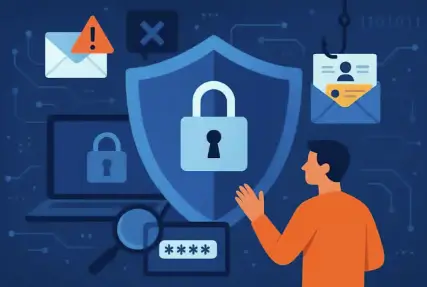
Understanding online security technologies requires a layered approach to protect data, systems, and communications from unauthorized access. Encryption secures data in transit and at rest; authentication and access control limit who can act and view. Continuous monitoring detects anomalies, while well-defined governance ensures accountability. Proactive risk assessment and incident response planning strengthen resilience. The combination of these elements creates a baseline that organizations must refine to withstand evolving threats and maintain trust, leaving practitioners with a clear, ongoing path to improvement.
What Is Online Security Technology and Why It Matters
Online security technology encompasses the tools, protocols, and practices designed to protect information, systems, and communications from unauthorized access, disclosure, alteration, or destruction.
It clarifies roles for stakeholders, supports risk assessment, and guides governance.
How Encryption Protects Your Data in Transit and at Rest
Encryption protects data both in transit and at rest by transforming information into unreadable formats unless a valid key is used.
Encryption protocols evolve to counter emerging threats, ensuring confidentiality across networks and storage.
This approach establishes data at rest safeguards and secure transmission paths, enabling users to exercise digital freedom with minimized exposure.
Continuous evaluation, implementation, and auditing reinforce resilience and trust in information systems.
How Authentication and Access Control Keep the Digital Door Locked
Authentication and access control mechanisms determine who may interact with a system and under what conditions, extending the protection boundaries established by encryption to the user and process level.
The discussion analyzes authentication protocols, access governance, and encryption workflows, emphasizing predefined rights, least privilege, and continuous verification.
Monitoring strategies enable threat detection, proactive authorization adjustments, and resilient access orchestration without sacrificing user autonomy.
Detecting Threats and Responding: Firewalls, Monitoring, and Best Practices
Firewalls, continuous monitoring, and disciplined incident response form the core of a proactive security posture, enabling rapid threat detection, containment, and recovery. The process emphasizes threat hunting, security analytics, and structured incident response to minimize exposure. Threat modeling informs preventive design, while ongoing monitoring sustains resilience, fusing clear metrics with disciplined, strategic actions for swift containment and recovery.
Frequently Asked Questions
How Do Online Security Technologies Impact User Privacy Daily?
Online security technologies affect daily life by shaping data collection, monitoring, and consent. They influence user privacy through encryption, authentication, and policy defaults, guiding freedom while balancing risk, transparency, and automated protections—illustrated by security basics and privacy safeguards.
What Evolving Threats Warrant Hardware Security Modules (HSM) Use?
Hardware modules mitigate evolving threat vectors, warranting HSM use when cryptographic tokens protect high-risk keys; a rigorous risk assessment identifies exposure, regulatory demands, and supply-chain risks, guiding deployment decisions for secure authentication, signing, and key management.
Can Quantum Computing Break Current Encryption Standards Soon?
Quantum computing raises significant concerns: quantum harms could compromise encryption standards within decades, not immediately. Analysts emphasize proactive strategies—transition to quantum-resistant algorithms, implement layered defenses, and monitor standards bodies—balancing freedom with robust, adaptable cryptographic protections.
What Trade-Offs Exist Between Security and System Performance?
Security tradeoffs exist: stronger defenses yield higher performance impact; cryptographic hardening and verification add latency, while lighter protocols boost speed. The trade-offs require proactive balancing, ensuring robust protection without unduly compromising system performance or user freedom.
See also: Smart Tech Platform 82948295 Performance
How Should Individuals Prioritize Security Investments at Home?
Individuals should prioritize a home firewall and data encryption, balancing cost and benefit; implement layered defenses, timely updates, and routine reviews, enabling freedom with informed risk management and proactive protections rather than reactive, blanket solutions.
Conclusion
Online security technologies form a disciplined, layered defense that reduces risk through encryption, strong authentication, access controls, and continuous monitoring. When governance and incident planning are integrated, organizations demonstrate proactive resilience rather than reactive response. By treating threats as a predictable surface to map and mitigate, they minimize exposure and speed recovery. The approach remains relentlessly forward-looking, like maintaining a vigilant firewall while a telegram arrives from the future, reminding stakeholders that security is ongoing, iterative, and essential.
